
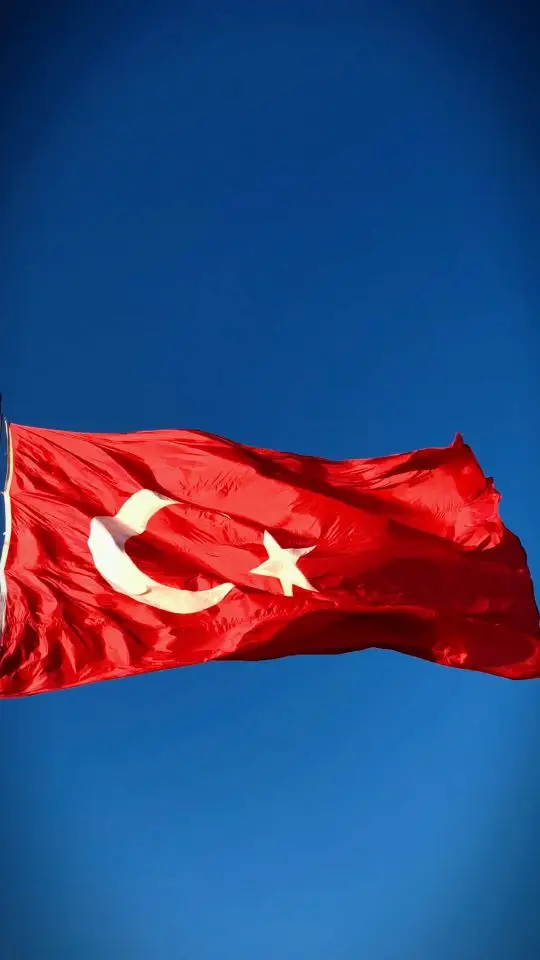
29 October: Republic Day
Every year on 29 October · {n}th anniversary of the Republic
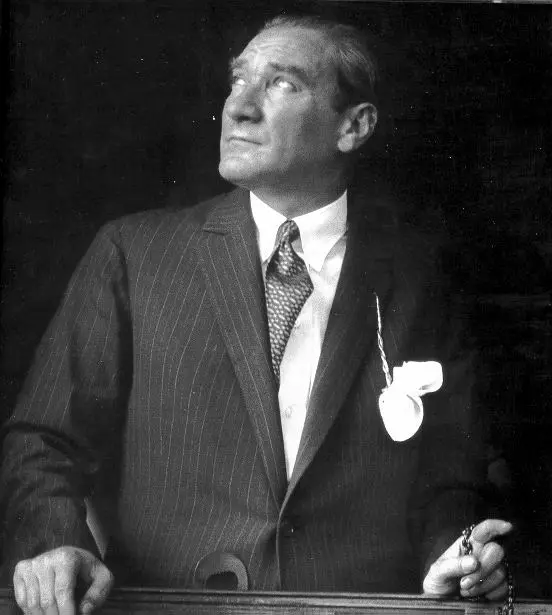
On 29 October 1923 Türkiye's Grand National Assembly declared the state a republic and elected Mustafa Kemal Pasha as its first president.
Republic Day is Türkiye's national holiday. It starts at 1 pm on 28 October and runs through 29 October. In Gelibolu in 2025, the day began with a wreath ceremony at the 2nd Corps Command, and a torch parade and a concert were announced for the evening. The town had been freed from occupation only eleven months before the Republic was proclaimed.
“How happy is the one who says I am a Turk!”
What happened?
After the First World War, a new Grand National Assembly met in Ankara on 23 April 1920. Its 1921 constitution opened with the principle "Sovereignty belongs to the nation without condition".6,3 The Assembly abolished the Ottoman sultanate on 1 November 1922.2 The Treaty of Lausanne followed on 24 July 1923.9 On 13 October 1923 the Assembly made Ankara the seat of government.1
On 27 October 1923 the cabinet resigned, and no new government could be formed.1 Mustafa Kemal and İsmet Pasha drafted a constitutional amendment, and the ruling People's Party group approved it first.1 On the evening of 29 October 1923 the Assembly passed it. Article 1 now read: "The form of government of the Turkish state is a republic."1 Mustafa Kemal Pasha was elected president unanimously, with 158 votes. İsmet Pasha was given the post of prime minister.1 In Ankara, a 101-gun salute announced the new republic.5
The first anniversary was officially celebrated in 1924. On 19 April 1925 a law (No. 628) made 29 October a national holiday.5 Today the holiday is set by Law No. 2429 of 1981 on national holidays. This law names 29 October as the national holiday and says the holiday begins at 1 pm on 28 October.4,3
Why it matters
The 1923 amendment gave the state's form of government a name. It also created the office of president, to be elected by the Assembly from among its members. With this change Türkiye moved from government by the assembly towards a parliamentary system.1
The 1922 abolition of the sultanate ended the Ottoman monarchy, in which the head of state came from one family.2 Proclaiming the republic completed this step in law: an assembly that held power in the nation's name now chose the head of state itself.6,1
Our note: the reforms of the following years can be read as built on the structure created that day.
Gelibolu's link
Mustafa Kemal first became widely known on the Gelibolu (Gallipoli) peninsula in 1915.7 When the Allies landed at Arıburnu (Anzac Cove) on 25 April, he led the 19th Division. He sent the 57th Regiment into action on his own initiative and held the heights of Conkbayırı (Chunuk Bair).8,7 In August he was given command of the Anafartalar Group and personally directed the attack of 9 August. This earned him the name "Hero of Anafartalar".8
After the First World War, Gelibolu was occupied. British troops entered the town on 30 November 1918, and the Greek army occupied it on 4 August 1920.9 After the Armistice of Mudanya, Eastern Thrace was handed back one district at a time. Bad weather delayed the handover, and Gelibolu was finally handed over to the Ankara government on 26 November 1922.9 So 29 October 1923 was the first Republic Day of a town that had been free for only eleven months. In 1923 Gelibolu was also made a province (vilayet). Under the Treaty of Lausanne, the peninsula became part of a demilitarised zone.9
In Gelibolu in 2025, the 102nd anniversary, the day began with a wreath ceremony in front of the 2nd Corps Command, a moment of silence and the national anthem. The main ceremony on 26 Kasım Caddesi included folk dances by schoolchildren, prizes for the holiday sports events and a weapons display by the 2nd Corps. A torch parade and a Republic concert were announced for the evening.10
How it is celebrated
Celebrations are held outdoors, with red and white decorations, morning parades, and concerts and fireworks in the evening; Istanbul's display over the Bosphorus is the largest.3 Evening torch parades (fener alayı) are a long-standing tradition.5
The official programme in Ankara begins at Anıtkabir, Atatürk's mausoleum. In 2025 the state ceremony there started at 11 am. A parade followed at 2 pm, from the Assembly to the first parliament building in Ulus, and a reception was held in the evening.11
The best-known song of the day is the Tenth Year March (Onuncu Yıl Marşı). It was written for the Republic's tenth anniversary in 1933. The lyrics are by Faruk Nafiz Çamlıbel and Behçet Kemal Çağlar, and the music is by Cemal Reşit Rey.12
Good to know
- The holiday lasts a day and a half: from 1 pm on 28 October to the end of 29 October. Public offices are closed.4,3
- Shops and other services may have shorter hours on the afternoon of 28 October, so check opening times before you go.13
- 2026 marks the 103rd anniversary of the Republic. Anniversaries are counted from 29 October 1923.1
- About four weeks later, on 26 November, Gelibolu celebrates its own day: the anniversary of its liberation from occupation in 1922.9
Sources
- Wikipedia: Proclamation of the Republic of Turkey ↗
- Wikipedia: Abolition of the Ottoman sultanate ↗
- Wikipedia: Republic Day (Turkey) ↗
- Mevzuat Bilgi Sistemi (Turkish): Law No. 2429 on National Holidays and General Holidays (Official Gazette, 19 March 1981) ↗
- Vikipedi (Turkish): 29 Ekim Cumhuriyet Bayramı ↗
- Vikipedi (Turkish): 1921 Anayasası (Constitution of 1921) ↗
- Wikipedia: Gallipoli campaign ↗
- Habertürk (Turkish): When and with what rank did Atatürk join the Gallipoli campaign? (7 March 2023) ↗
- TÜBA (Turkish), V. Türkan Doğruöz: Gelibolu During the National Struggle (2024) ↗
- Gelibolu Gaste (Turkish): Republic Day celebrated in Gelibolu (29 October 2025) ↗
- NTV (Turkish): The 102nd year of the Republic to be celebrated in the capital (29 October 2025) ↗
- Vikipedi (Turkish): Onuncu Yıl Marşı (Tenth Year March) ↗
- Sözcü (Turkish): Is 28 October a holiday or a half day? (23 October 2023) ↗
Saying: Atatürk, 10th Anniversary Speech (1933)
Our note: the text above is compiled from the sources listed; the small numbers in the text link to them.