History of Gallipoli
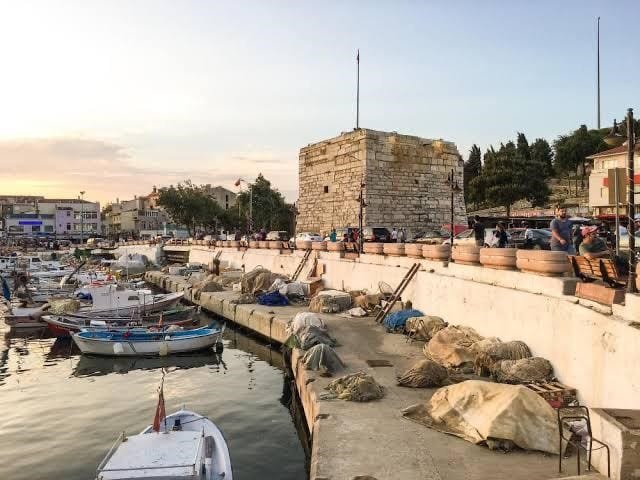
Gallipoli (Gelibolu), once known as Kallipolis, meaning "the good and beautiful city," first appears in history as a place of importance after the collapse of the Hittite Empire around 1200 BC, during the migrations of the Phrygians and later the Lydians into Anatolia. In 545 BC, when the Lydian king Croesus was defeated in his war with the Persians, the Persians brought the Lydian kingdom to an end and thereby gained dominance around the Dardanelles. Gallipoli later came under the rule of the Spartans, Macedonians, Pergamenes, Romans, Byzantines and, finally, the Turks.
Throughout history the Gallipoli Peninsula has been a route for many peoples, and fortifications were therefore built at its strategic points. The town on its present site first rose to prominence as a fortress during the Roman period. Under Byzantine rule it was attacked first by the Goths and then by the Huns. Over time the fortress grew into an important port and trading centre. The region was also affected by the Arab armies' campaigns against Constantinople. The Crusaders passed through here on their way to Anatolia, and in 1204 Gallipoli came under Latin rule.
In the final period of Byzantium, the Turkmen beyliks that had become active along the Aegean and Marmara coasts also set their sights on the Gallipoli Peninsula. Ottoman forces under Süleyman Paşa, son of Orhan Bey, later arrived on the peninsula as allies of Emperor Kantakuzenos, and Süleyman Paşa was given Çimbi Castle as a base. This became a foothold for the Ottomans. Acting increasingly independently, Süleyman Paşa launched raids towards Thrace on one side and towards Gallipoli on the other, and the town was conquered in 1354. Under Ottoman rule Gallipoli became a key base for campaigns into Thrace and the Balkans, gaining importance as a crossing point and naval base for the Ottoman armies. It remained an important military naval base until the conquest of Istanbul, was heavily fortified under Mehmed the Conqueror (Fatih), and gradually began to lose its role as a naval base after the Golden Horn (Haliç) shipyard in Istanbul came into service in 1515.
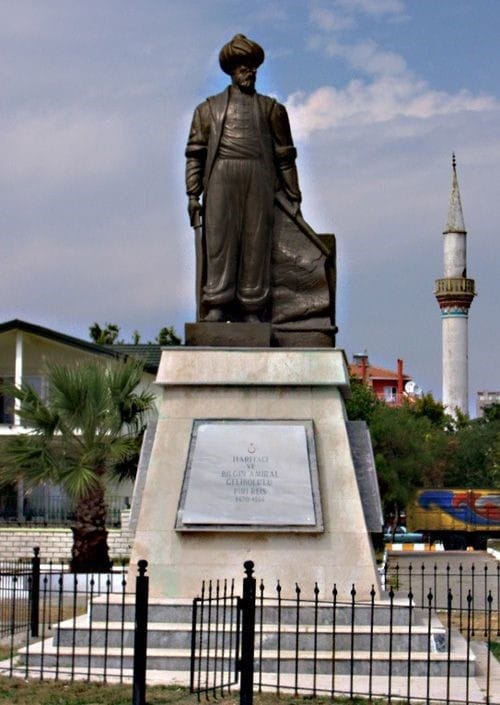
After the conquest, Gallipoli became a sanjak (district) and sanjak capital, as well as the first Paşa sanjak of Rumelia. It later won renown as a centre of naval administration, and the Kaptan-ı Derya (Grand Admiral) at the head of the Ottoman fleet made it his headquarters. Of the 26 buildings constructed in Gallipoli during the reign of Murad II, only 7 have survived to the present day, and most of the structures from the Fatih era have also been lost. In 1915, during the Gallipoli Campaign, the town was bombarded and damaged in places. [1]
At the end of the First World War, British troops occupied Gelibolu on 30 November 1918, and the Greek army occupied the town on 4 August 1920. [2] After the Armistice of Mudanya, the handover of the town was planned for 25 November 1922, but bad weather delayed the arrival of the officials and gendarmes. The Allies, who had a French headquarters in the town, handed Gelibolu over to the officials and gendarmes of the Ankara government (TBMM) on 26 November 1922, and TBMM administration was set up at once. [2] The town celebrates this day every year as its liberation day: 26 November: Liberation of Gelibolu.
Gelibolu was made a province (vilayet) in 1923. [2] In 1926, under Law No. 877, it became a district centre, and today it belongs to Çanakkale. [1]
Our note: This page used to say that Greek forces left Gelibolu on 3 October 1922. That is the day the Mudanya talks began. According to the TÜBA study, Gelibolu was handed over on 26 November 1922, so we have corrected the text.