
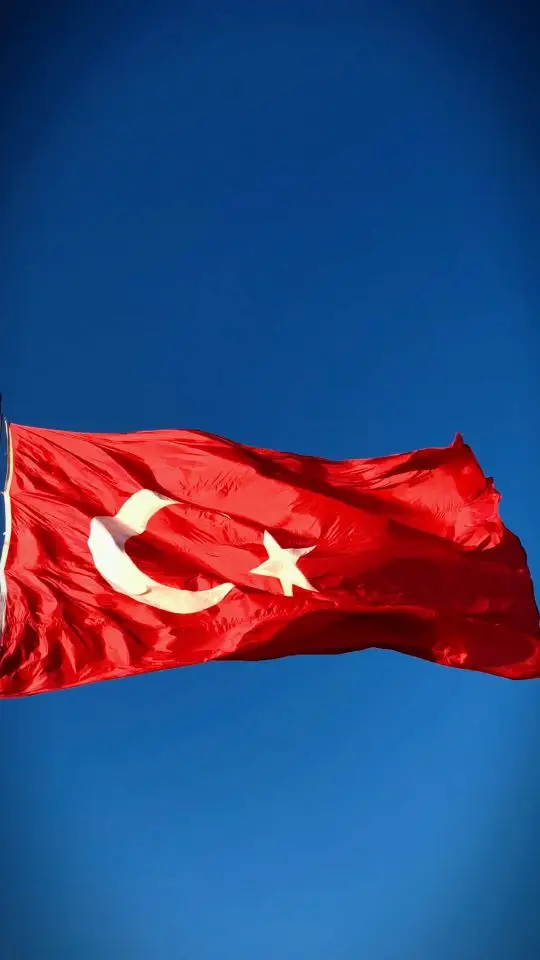
26 November: Liberation of Gelibolu
Every year on 26 November · {n}th anniversary
Occupied by the Allies in 1918 and by Greek forces in 1920, Gelibolu passed to Ankara's administration on 26 November 1922, after the Mudanya armistice.
That makes 26 November the town's own liberation day. It opens each year with a ceremony at the Atatürk Monument in front of the 2nd Corps, followed by poems, a liberation walk, folk dances and an evening concert.
“Happy {n}th anniversary of Gelibolu's liberation!”
The occupation years
The Armistice of Mudros (30 October 1918) had no article on Gelibolu itself, yet the area was occupied under its clauses on the Straits1. The occupation formally began on 9 November 1918, when British troops landed at Seddülbahir and Kumkale; the southern peninsula was soon handed to the French1. According to Atabay, the French held the peninsula with about 3,000 men and the British the Çanakkale area with about 4,0002.
British units occupied Gelibolu (Gallipoli) on 30 November 1918 and took over the pier office, the old government building and other official buildings1. Another 500 British soldiers arrived on 14 January 19191. Doğruöz notes that the Muslim population tried to stay calm despite abuses1.
In summer 1920 the Greek army began occupying Eastern Thrace (Doğu Trakya): Tekirdağ on 20 July, Edirne on 26 July and Gelibolu on 4 August 19201. The Treaty of Sèvres, signed on 10 August 1920, assigned the region to Greece1. Under the Greek governor-general in Edirne, the Sanjak of Gelibolu comprised the central district, Şarköy, Keşan and Maydos (Eceabat)1.
Liberation
After the battle of 30 August 1922, Turkish forces entered İzmir on 9 September; by 18 September Anatolia was clear, but Eastern Thrace was still occupied1. Talks at Mudanya opened on 3 October and the armistice was signed on 11 October 19221; it took effect at midnight on 14/15 October5. Greek forces were to withdraw west of the Meriç (Maritsa) river, and the handover of Thrace was to start on 30 October1.
The Ankara assembly (TBMM) appointed Refet Pasha (later Refet Bele) to take over Eastern Thrace and set up its administration; he arrived in Istanbul on 19 October 19223. The handover began at Çerkezköy on 31 October and continued town by town1.
On 14 November Gelibolu's handover was set for 25 November, though the Allies, still occupying the town, wanted to delay it1. It was agreed that a Turkish liaison officer would join the French headquarters in Gelibolu and only a few gendarmes would land to keep order1. Bad weather on 22 November held up the officials and gendarmes, so after Refet Pasha intervened they were ordered to leave Keşan on 24 November1.
They were only able to take over Gelibolu on 26 November 1922, and Turkish administration was set up at once1. Asım Bey became district governor (mutasarrıf), Major Refet Bey battalion commander and Captain Süleyman Bey company commander1. On 1 December Refet Pasha reported to Ankara that, with Gelibolu handed over, all of Eastern Thrace was under the assembly's rule1.
Why it matters
For the town at the neck of the peninsula where the 1915 campaign was fought, 26 November ended about four years of foreign rule that had begun on 30 November 19181. Doğruöz notes the handover mattered especially because the town commands the Dardanelles1.
The story did not end in 1922: under Mudanya, no Turkish military force could be kept on the peninsula south of the Bolayır line1. The Treaty of Lausanne, signed on 24 July 1923, demilitarised the Straits, and the Gelibolu peninsula lay inside that zone1. Çanakkale and the Gelibolu peninsula were handed to Turkish officials after Lausanne was ratified2.
Our note: seen together with 1915, 26 November can be read as the day the town closed a long and hard chapter that ran from 1915 to 1922.
How it is celebrated today
Celebrations open with a wreath-laying, a moment of silence and the national anthem at the Atatürk Monument in front of the 2nd Corps Command6,8.
On the 103rd anniversary in 2025, the wreath was laid by District Governor Cihat Koç, 2nd Corps Commander Major General Rasim Yaldız and Mayor Dr. Ali Kamil Soyuak, and poems were read after the speeches6. In the afternoon a liberation walk went from the roundabout with the Gazi Süleyman Paşa statue to the Atatürk Cultural Centre, which hosted folk dances and live music6. In the evening, singer Hande Ünsal gave a concert on Balıkhane Meydanı7.
In 2017 the programme also had pupils' poems, folk dances, sports competitions and a mevlit (memorial recital) at Gazi Süleyman Paşa Mosque8.
Good to know
- Akbaş Raid, 26 January 1920: arms and ammunition were taken from French-guarded depots at Akbaş near Gelibolu to the Anatolian shore1.
- White Russians of Wrangel's army lived in Gelibolu from 22 November 1920 to 5 May 19231.
- Under the 14 November plan, Uzunköprü, Keşan and Şarköy were due on 18 November, İpsala on 19 November, and Edirne, Mustafapaşa and Gelibolu on 25 November1.
- By 28 November 1922, with Turkish gendarmes on the borders, all of Eastern Thrace was under Turkish administration1.
- The Armistice of Mudanya capped Turkish gendarmerie in Eastern Thrace at 8,000 men4.
Sources
- Turkish Academy of Sciences (TÜBA), Local History of the National Struggle 1918-1923, Vol. 10: V. Türkan Doğruöz, "Gelibolu During the National Struggle" (Turkish text, 2024) ↗
- Tarih ve Günce (DergiPark): Mithat Atabay, "The Population Exchange in the Gelibolu Province" (Turkish, 2018) ↗
- Journal of Atatürk Research Center (DergiPark): Cengiz Mutlu, "Refet Pasha's Arrival and Activities in Istanbul" (2021) ↗
- Wikipedia: Armistice of Mudanya ↗
- Turkish Wikipedia: Mudanya Ateşkes Antlaşması (entry into force) ↗
- Gelibolu'nun Sesi (Turkish): Liberation celebrated (26 November 2025) ↗
- CNN Türk / AA (Turkish): Hande Ünsal concert in Gelibolu (27 November 2025) ↗
- TGRT Haber (Turkish): Gelibolu's liberation celebrations (26 November 2017) ↗
Saying: 26 November 1922
Our note: the text above is compiled from the sources listed; the small numbers in the text link to them.