
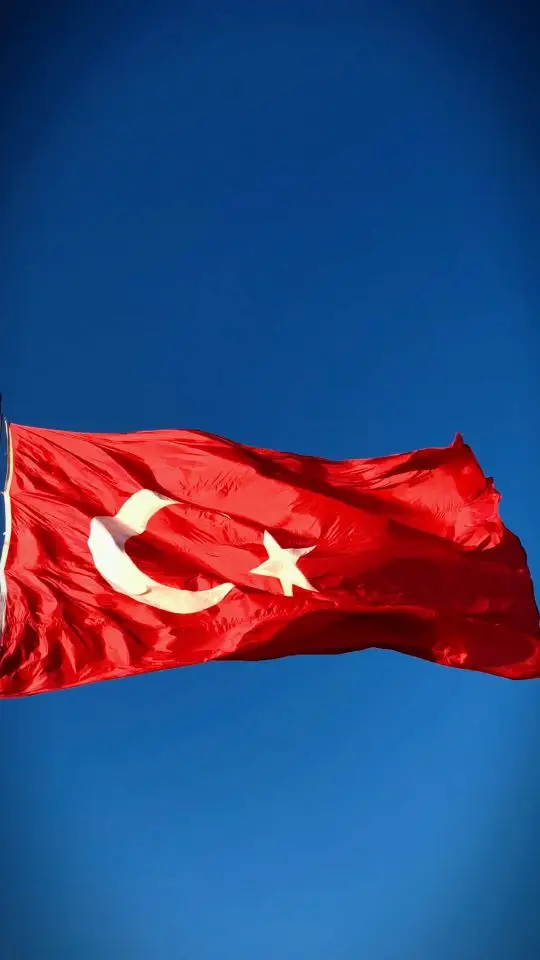
18 March: Çanakkale Victory and Martyrs' Day
We remember all who fell at Çanakkale
Every year on 18 March
On 18 March 1915 the Allied fleet tried to force the Dardanelles; facing Nusret's mines and the shore batteries, it lost three battleships and withdrew.
Unable to pass by sea, the Allies turned to land: the battles on the Gallipoli Peninsula began on 25 April 1915. Since 2002, 18 March has been Martyrs' Day by law, marked at the Martyrs' Memorial, across Türkiye and in Gelibolu itself.
“What is this battle of the Straits? Is there any like it in the world?”
What happened?
According to Doğruöz, the Allies aimed to seize the Straits, knock the Ottoman Empire out of the war and open the easiest route to Russia9. Allied ships first shelled the forts at the mouth of the strait on 3 November 19141. The second attack opened on 19 February 1915 with long-range fire; on 26–27 February the ships entered the strait1.
On 8 March 1915 the Ottoman minelayer Nusret, under Captain Hakkı Bey, laid 26 mines in Erenköy Bay, parallel to the shore2. They were placed about 100 metres apart and 4.5 metres below the surface2. It is also remembered as the night of 7/8 March, off Karanlık Liman3.
On 18 March 1915 the fleet made its main attempt. The battleships Bouvet, Irresistible and Ocean struck mines and sank; Gaulois, Suffren and Inflexible were badly damaged2. The TDV Encyclopedia of Islam says the fleet lost about 35 per cent of its strength and withdrew; the defence was led by Cevad Pasha, the "hero of 18 March"1.
The day's best-known name is Seyit Onbaşı (Corporal Seyit Ali Çabuk) from Havran. As the story goes, when the shell crane at the Rumeli Mecidiye battery was knocked out, he carried a 215 kg shell to the gun; the third shot hit Ocean, which then struck one of Nusret's mines and sank4.
With the sea route closed, the campaign moved ashore: landings were made at Arıburnu (Anzac Cove) and Seddülbahir on the morning of 25 April 19151. The Allies left Anafartalar and Arıburnu on 19–20 December 1915 and Seddülbahir on 8–9 January 19161.
Why it matters
On 18 March the attempt to force the strait with ships alone failed, and the war turned to the land1. The TDV Encyclopedia of Islam links the campaign to the prolonging of the First World War, the fall of Tsarist Russia and a change of government in Britain1.
Losses were very heavy, though figures vary between sources. The same work puts total British losses alone at 213,980, and gives estimates for Turkish losses of between 190,000 and 350,0001.
Law no. 4768 of 27 June 2002 made 18 March Martyrs' Day (Şehitler Günü) in Türkiye6. A regulation published in the Official Gazette on 24 August 2003 sets out how the ceremonies are held6.
Gelibolu's link
The peninsula is named after the town of Gelibolu10. In English and many other languages the campaign is known as "Gallipoli"; in Turkish it is usually called the Çanakkale War or the Çanakkale Battles11.
The town itself suffered: Doğruöz writes that the Allies heavily bombarded Gelibolu during the war, destroying or badly damaging many buildings9. After the 1912 Mürefte earthquake and the battles, it looked like a ruin by 19199.
The 2nd Corps Command, headquartered in Gelibolu, takes part in the ceremonies12. At the 111th anniversary in 2026, 2nd Corps Commander Major General Mehmet Özeren spoke at the Martyrs' Memorial for the Turkish Armed Forces, and the 57th Infantry Regiment, recently re-formed under the 2nd Corps, also took part7.
Our note: walking the peninsula, remembering together those who died on both sides in 1915 seems to us the simplest lesson this land has to offer.
How it is observed
Under the regulation, 18 March ceremonies include a wreath-laying, raising the flag to the national anthem, a moment of silence and a gun salute; martyrs' cemeteries and graves are visited and the cemetery book is signed6.
The main ceremony is held at the Martyrs' Memorial (Şehitler Abidesi) on the Gallipoli Peninsula. In 2026 Vice President Cevdet Yılmaz laid a wreath at the Atatürk Monument, followed by a moment of silence, the anthem, speeches and prayers; the SOLOTÜRK team flew over and naval units paraded in the strait7.
In Gelibolu the day starts at the Atatürk Monument outside the 2nd Corps headquarters; in 2024 the district governor, the corps commander and the mayor laid the wreath12. It went on at the Gelibolu Martyrs' Cemetery with prayers and carnations on the graves, and ended with poems, a play, folk songs and a zeybek dance at the district education directorate12.
Village schools hold their own events, as Evreşe's schools did in 202313. In 2026 Gelibolu's archery grounds hosted a provincial championship in memory of 18 March14.
Remembrance begins on 8 March, when TCG Nusret, a faithful replica built at Gölcük in 2011, sails from Çanakkale to the site of the minefield and a wreath is laid off Erenköy2.
Good to know
- 18 March is not a public holiday; in 2025 schools closed only in Çanakkale province, by decision of the governor's office8.
- In 2025 the Gallipoli Historical Site Directorate handed Seyit Onbaşı's military register entry and a photograph of him aged 20, found in the archives, to the Seyit Onbaşı Memorial Museum in Havran5.
- Seyit Onbaşı took the surname Çabuk; he returned to his village in 1918, worked in forestry and charcoal making, and died in 19394.
Sources
- TDV Encyclopedia of Islam: Zekeriya Kurşun, "Çanakkale Muharebeleri" (Turkish, vol. 8, 1993) ↗
- DHA (Turkish): TCG Nusret on the same route 110 years later (8 March 2025) ↗
- Milliyet (Turkish): Divers remember the Nusret (21 March 2022) ↗
- Hürriyet (Turkish): Who was Seyit Onbaşı? (18 October 2018) ↗
- Milliyet (Turkish): Unknown photograph of Seyit Onbaşı shared for the first time (1 December 2025) ↗
- Official Gazette of Türkiye, Ministry of National Defence: Regulation on ceremonies for 18 March Martyrs' Day and 19 September Veterans' Day (Turkish, 24 August 2003, no. 25209) ↗
- Habertürk / Anadolu Agency (Turkish): Ceremony at the Martyrs' Memorial for the 111th anniversary (18 March 2026) ↗
- CNN Türk (Turkish): Is 18 March a public holiday? (18 March 2025) ↗
- Turkish Academy of Sciences (TÜBA), Local History of the National Struggle 1918-1923, Vol. 10: V. Türkan Doğruöz, "Gelibolu During the National Struggle" (Turkish text, 2024) ↗
- Wikipedia: Gelibolu ↗
- Wikipedia: Gallipoli campaign ↗
- Gelibolu'nun Sesi (Turkish): 18 March Martyrs' Day and the Çanakkale Naval Victory (18 March 2024) ↗
- Gelibolu'nun Sesi (Turkish): 18 March programme at Evreşe schools (22 March 2023) ↗
- Gelibolu'nun Sesi (Turkish): Provincial archery championship in memory of 18 March (1 March 2026) ↗
Saying: Mehmet Âkif Ersoy, To the Martyrs of Çanakkale
Our note: the text above is compiled from the sources listed; the small numbers in the text link to them.